
Equity indices faced a heavy drubbing on Thursday after an initial rally, with Sensex tanking 1,045.60 points amid a largely bearish trend overseas after the US Federal Reserve hiked rates by 75 basis points.

Benchmark equity indices Sensex and Nifty closed higher by more than half a per cent on Wednesday following buying in IT, financial and oil stocks after the RBI slowed down the pace of interest rate hikes. Ending its two-day slide, the 30-share BSE Sensex rebounded by 377.75 points or 0.63 per cent to close at 60,663.79 with 24 of its constituents posting gains. The broader Nifty of the NSE spurted by 150.20 points or 0.85 per cent to settle at 17,871.70, riding on a rally in Adani Enterprises, Adani Ports and HDFC Life.

Tata Steel, SBI, L&T and Sun Pharma advanced 2-5% each.

Equity benchmarks began the week on a downbeat note on Monday, weighed by heavy selling in market heavyweight Reliance Industries and persisting weakness in global bourses. The rupee plunged to its lifetime low against the US dollar amid unabated foreign fund outflows, underscoring the risk-off sentiment prevailing globally as central banks embark on policy tightening to tame soaring inflation. Slipping for the second straight session, the 30-share BSE Sensex shed 364.91 points or 0.67 per cent to close at 54,470.67.

Reliance was the top gainer in the Sensex pack, surging over 3 per cent, followed by ICICI Bank, Bharti Airtel, Dr Reddy, Maruti and ITC.
According to the foreign brokerage major, after two quarters of 'near-zero' growth aggregate headline profit for Sensex companies, it is expected to show a weak recovery.

Tata Steel was the top loser in the Sensex pack, shedding over 4 per cent, followed by Bharti Airtel, Axis Bank, ONGC, SBI and Sun Pharma.
IndusInd Bank was the top laggard in the Sensex pack, falling over 5 per cent, followed by HDFC, Axis Bank, PowerGrid, SBI, Bajaj Finserv and Bharti Airtel.

Ajit Mishra, vice president, Research, Religare Broking, answers your queries.

Dalal Street investors became richer by more than Rs 16.36 lakh crore this year as the equity market scaled new highs despite persistent geopolitical uncertainties and inflation worries. Analysts attributed better macroeconomic fundamentals, the confidence of retail investors and foreign investors investing again in the domestic equities towards the latter half of 2022 as the key factors that led to the outperformance of the Indian market in comparison to many other stock markets worldwide. During the initial part of the year, markets were jolted by the Russia-Ukraine war.

NTPC was the biggest loser in the Sensex pack, tumbling 2.25 per cent, followed by Tata Motors, Bharti Airtel, PowerGrid, HDFC, Reliance Industries, Hero MotoCorp and M&M that shed up to 1.85 per cent.

Tata Steel (then Tata Iron and Steel), the most valuable index company in 1991, is now the least valuable.

Benchmark Sensex trimmed early gains to close marginally higher while Nifty settled flat in choppy trade on Tuesday as gains in auto shares were offset by selling pressure in banking and energy shares. The 30-share BSE barometer closed marginally up by 37.08 points or 0.06 per cent to 60,978.75 with 15 of its stocks ending in green and the rest in red. The index opened higher and gained over 300 points to a high of 61,266.06 in early trade.

'With the ease of access, we have seen an increased participation from tier-2, tier-3, and tier-4 cities/towns.'

Ajit Mishra, vice president, Research, Religare Broking, answers your queries.

PowerGrid was the top gainer in the Sensex pack, rallying over 4 per cent, followed by NTPC, UltraTech Cement, Tech Mahindra, Reliance Industries and IndusInd Bank.

Infosys on Monday overtook Reliance Industries to become the second most influential stock on BSE benchmark Sensex after its shares surged by 1.52 per cent.

As the Indian equities signed off 2019 on a remarkable note, the m-cap of BSE-listed companies rose by Rs 11,05,363.35 crore to Rs 1,55,53,829.04 crore.
IndusInd Bank was the top gainer in the Sensex pack, rallying up to 46 per cent. Other winners were Bharti Airtel, L&T, Bajaj Finance, Kotak Mahindra, Bajaj Auto, HUL and HDFC -- rising up to 10 per cent. On the other hand, Maruti Suzuki, Tech Mahindra, Sun Pharma and Reliance Industries closed with losses. NSE Nifty finished 323.60 points, or 3.89 per cent, up at 8,641.45.

Yes Bank was the biggest gainer in the Sensex pack, rallying 11.48 per cent amid reports that private equity firms have showed interest in buying a major stake in the private sector lender.
.jpg)
Markets ended flat on Tuesday, amid a volatile trading session, as investors exercised caution ahead of the two-day FOMC meet starting today and Reserve Bank of India's monetary policy later this week.
In a range-bound trading, the BSE benchmark Sensex ended a shade higher by 1.57 points in the special 90-minute trading today as funds refrained from making any major commitments in the absence of global cues.

IndusInd Bank was the top gainer in the Sensex pack, soaring over 7 per cent, followed by Bharti Airtel, HCL Tech, Tata Steel, Tech Mahindra and Dr Reddy's.
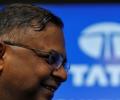
The 2019 list shows a 37 per cent jump in brand value for the Tata group, to $19.55 billion for 2019, the highest in the top 25.

The benchmark BSE Sensex ended down 2.23 per cent. The Bank Nifty fell 3.59 per cent.

Ajit Mishra, vice president, Research, Religare Broking, answers your queries.

There is polarisation among sectors with IT and healthcare receiving the lion's share of FPI money in the past two quarters.

The 30-share Sensex, after opening on a strong footing, continued its upward march to hit an all-time high of 35,827.70. The NSE Nifty also hit a record intra-day high of 10,975.10, before finishing at 10,966.20, up 71.50 points.
Investors' wealth rose by Rs 2,22,763.25 crore in three days of market rally, with the benchmark Sensex closing at an all-time high on Thursday. At close of trade, the 30-share BSE index gained 254.80 points or 0.48 per cent to 53,158.85, its lifetime closing high. During the day, the benchmark also reached its all-time intra-day peak of 53,266.12 points. The benchmark has gained 786.16 points in three days.

Operating margins have been the primary driver of corporate earnings in India in recent quarters, despite revenue growth suffering from weak consumer demand. Companies across sectors have reported a sharp improvement in earnings before interest, tax, depreciation, and amortisation (Ebitda) margins over the past two years, benefiting from lower commodity and energy prices. Higher margins more than compensated for slower revenue growth, resulting in double-digit growth in net profit for five consecutive quarters.

Ajit Mishra, vice president, Research, Religare Broking, answers your queries.
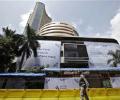
Investors booked profits at higher levels after the Sensex and Nifty hit all-time highs in the previous session.

Sun Pharma emerged as the star performer and closed 4.03 per cent up at Rs 675.45, while Cipla rallied 1.58 per cent to Rs 592.60.

BSE-IT index out-performed by surging nearly 3 per cent after robust TCS results.

Axis Bank was the top laggard in the Sensex pack, shedding over 3 per cent, followed by SBI, ICICI Bank, ONGC, HDFC and Kotak Bank.

Ajit Mishra, vice president, Research, Religare Broking, answers your queries.

Kotak Bank was the top loser in the Sensex pack, shedding over 2 per cent, followed by ICICI Bank, PowerGrid, HDFC, IndusInd Bank and Axis Bank. NSE Nifty declined 45.75 points to 16,568.85.

ONGC was the top loser in the Sensex pack, cracking over 16 per cent, followed by Reliance Industries, IndusInd Bank, Tata Steel, TCS, SBI, ICICI Bank and Bajaj Auto.

"We will raise Rs 300 crore via bonds of two-, three- and five-year tenures. This will be our maiden bond issuance and is part of our effort to widen funding sources," says Vimal Bhandari, executive vice-chairman and chief executive officer (CEO), Arka Fincap. The firm, a subsidiary of Kirloskar Oil, is only five years old and small (assets of around Rs 5,000 crore with an "AA" rating), but the response to this float will be closely watched: It would be the first by a non-banking finance company (NBFC) after Mint Road upped the risk weights on bank exposures to them by 25 percentage points. The move by the Reserve Bank of India (RBI) has caught NBFCs off guard even though the issue had been flagged by Governor Shaktikanta Das with their corner-room occupants (and that of banks) in July and August 2023 - on consumer credit and the dependency on bank borrowings.

Polarisation and the increase in index weight of a few a stocks have weighed on performance. The worst performers include Nippon India Large Cap and HDFC Top 100 (2.6 per cent).
